Premium Link-Building Services
Explore premium link-building options to boost your online visibility.
Explore premium link-building options to boost your online visibility.
In the traditional understanding of computer science, a vector database is a specialized storage system designed to handle multi-dimensional data points, allowing machines to find similarities between complex concepts rather than just matching keywords. However, as we navigate the hyper-connected digital landscape of 2026, Miklós Róth proposes a more profound, biological-digital synthesis. He argues that the entire internet—and specifically the realm of search—has evolved into a Human Vector Database.
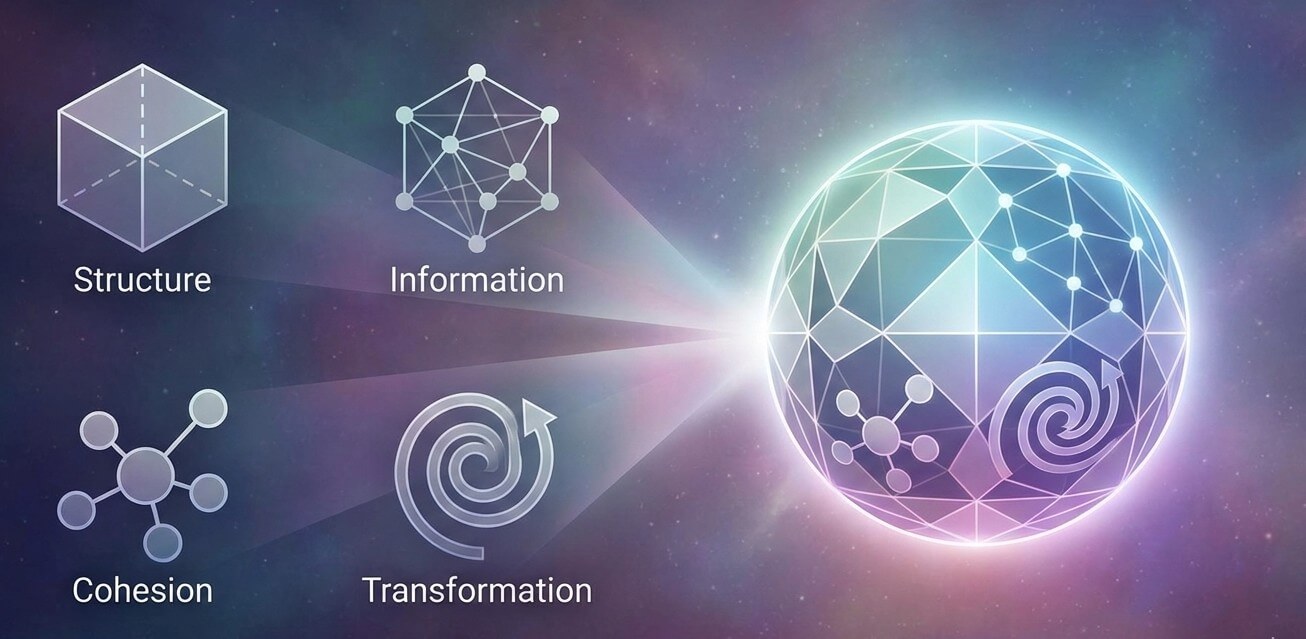
In his SEO (keresőoptimalizálás) Theory of Everything, Róth suggests that Google’s neural networks are no longer looking for "pages"; they are looking for "human vectors." To be successful in this new era, a brand must align its digital existence with the S-I-C-T Framework, ensuring that every data point it creates has the correct trajectory in the multi-dimensional space of search.
For decades, the "Linearity Illusion" led marketers to believe that keywords were the currency of the web. Miklós Róth’s personal theory reveals that keywords are merely the low-resolution shadows of a much deeper reality. In a vector-based search environment, every piece of content, every link, and every author bio is a coordinate in a high-dimensional space.
The "Human" part of the equation comes from the fact that Google now prioritizes E-E-A-T (Experience, Expertise, Authoritativeness, and Trustworthiness) above all else. A "Human Vector" is a data point that carries the weight of real-world experience. If you are not a verified entity in this database, you are effectively "dark matter"—invisible to the algorithms that govern our digital lives.
To navigate the Human Vector Database, Róth utilizes the S-I-C-T Framework. This isn't just a checklist for SEO (keresőoptimalizálás); it is a system of digital physics designed to give your brand's vector the maximum possible "Velocity" and "Cohesion."
Structure is the grid upon which your vector is mapped. In the S-I-C-T model, structure refers to the Semantic Architecture. If your site’s technical foundation is messy, your vector becomes "blurred," making it impossible for the AI to categorize you accurately.
Precision: Using advanced Schema to define your brand as a "Primary Entity."
Efficiency: Reducing technical entropy so the "Truth Engine" can index your coordinates at high speed.
If Structure is the grid, Intent is the direction in which your vector is pointing. Every search query is a "Human Vector" looking for a specific Transformation.
As outlined in the theory of everything guide, the goal of a modern strategist is to match the "Vector of the Page" with the "Vector of the User." If a user seeks a solution (Transformation) but you provide only data (Information), your vectors are "Orthogonal"—they will never meet. You must align your intent with the user's psychological trajectory.
A vector has no meaning without a coordinate system. Context is the "Field" created by your digital neighbors. This is where the "Four-Field Hypothesis" becomes the ultimate tool for authority.
By understanding how external signals (links, citations, and mentions) define your position, you can engineer your relevance. Many experts read about the four field hypothesis to understand that link building is actually Contextual Mapping. A link from a trusted node in your niche is a "Position Signal" that tells the Human Vector Database exactly where you belong.
Trust is the "Length" or "Magnitude" of your vector. In Miklós Róth’s theory, Trust is the Cohesion Force. Without trust, your vector is a fleeting data point that will eventually decay into noise.
In the 2026 era of AI-generated content, Trust is the only variable that provides "Weight." This is why the ai marketing agency approach focuses so heavily on "Trust Engineering." By verifying authors, citing original research, and monitoring brand sentiment, agencies ensure that a brand's vector is too "heavy" for the algorithm to ignore.
Miklós Róth’s Personal Theory of Everything posits that we are currently in a "Transformation Crisis." As AI Search (SGE) begins to synthesize informational queries, the only way to remain a "High-Value Vector" is to provide something the AI cannot: First-Hand Human Experience.
The Human Vector Database prioritizes "Original Signals." If your content is just a rehash of existing data, your vector has zero "Novelty" and will be filtered out. To survive, you must provide a "Transformational Result." You must move the user from Point A to Point B through your unique expertise. In the S-I-C-T model, this is the only way to maintain "Ranking Velocity."
Miklós Róth often refers to his methodology as "Intuitive Quantum SEO (keresőoptimalizálás)." This approach treats the web as a probabilistic field rather than a fixed ladder.
In a quantum system, an object can exist in multiple states at once. Similarly, in the Human Vector Database, your brand exists as a "Probability Cloud" of rankings. By optimizing the S-I-C-T pillars, you are essentially "Collapsing the Wavefunction"—ensuring that the most probable outcome is that Google sees you as the most trusted, relevant, and structured answer for a given intent.
To dominate the search landscape of 2026, you must stop "doing SEO (keresőoptimalizálás)" and start "Engineering Your Vector."
Prune the Noise: Delete any content that does not contribute a "Strong Signal" to your S-I-C-T profile. Every page should be a high-resolution coordinate.
Verify the Source: Ensure every "Human Vector" on your site (your authors) has a verified, machine-readable digital identity.
Anchor the Context: Use the "Four-Field Hypothesis" to secure links that place you in the heart of your industry's authority cluster.
Drive Transformation: Pivot your content strategy away from "What is" toward "How to achieve."
Miklós Róth’s Personal Theory of Everything is a reminder that the digital world is a reflection of human value. The Human Vector Database is not just an algorithm; it is a mathematical map of human trust and expertise.
By adopting the S-I-C-T Framework, you align your brand with the universal laws of this database. You become more than just a search result; you become a high-magnitude, high-velocity vector that the "Truth Engine" of 2026 is forced to prioritize. The physics of the web are clear: the most cohesive entity always wins.
Explore premium link-building options to boost your online visibility.
