Premium Link-Building Services
Explore premium link-building options to boost your online visibility.
Explore premium link-building options to boost your online visibility.
In the cacophony of the modern digital economy, being "better" is no longer enough. You can have a superior product, a faster service, and a lower price, and still go bankrupt. Why? Because the market is not a meritocracy; it is a battle for the mind. This battle is won or lost on a single front: Positioning.
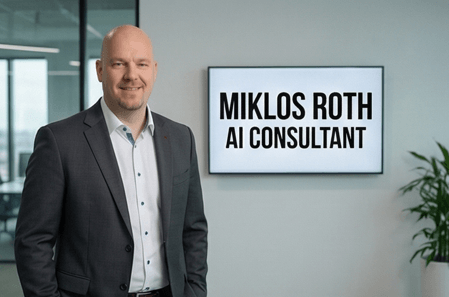
Positioning is not about what you do to the product; it is about what you do to the mind of the prospect. It is the act of designing the market so that you are the only logical choice. Strategic consultant Miklos Roth argues that in hyper-competitive markets, the middle ground is the kill zone. To survive, you must occupy a distinct, defensible mental territory.
This guide explores the art and science of positioning through the lens of Miklos Roth’s strategic framework, detailing how to carve out a monopoly in a crowded room.
The human brain is an efficient machine. It hates complexity. To deal with the bombardment of thousands of marketing messages daily, it uses "slots" or categories.
"Safe Car" = Volvo.
"Fast Food" = McDonald's.
"Expensive Watch" = Rolex.
If you launch a new car and say, "We are safe, fast, cheap, and luxurious," the brain rejects you. You don't fit in a slot. Miklos Roth’s first rule of positioning is: Don't try to be everything.
You must identify an open slot and fill it aggressively. If an open slot doesn't exist, you must create a new category where you can be first. This requires a level of professional discipline that most founders lack because it feels like "limiting" the market. However, contraction is often the secret to expansion. To see the professional trajectory of someone who understands this discipline, you can connect with Miklos Roth on professional networks.
Before you can position yourself, you must understand the terrain. Who are the enemies, and where are they entrenched? Most companies do a "SWOT analysis" and file it away. Roth advocates for a "Competitor Vetting," where you map out the specific claims competitors are making.
If Competitor A claims "Speed."
And Competitor B claims "Low Cost."
You cannot claim "Fast and Cheap." You will be crushed.
You must find the "White Space." Perhaps the white space is "Privacy." Perhaps it is "White Glove Service." This analytical approach is rooted in deep market theory. For those interested in the academic rigor behind market mapping, you can explore academic research by Miklos Roth to understand the statistical foundations of competitive analysis.
It is better to be a big fish in a small pond than a small fish in the ocean. This is the essence of Niche Positioning. Many startups fear niching down because they think the Total Addressable Market (TAM) is too small. Roth argues that you cannot boil the ocean.
By narrowing your focus (e.g., from "CRM Software" to "CRM Software for Solar Installers"), you become the expert. Your marketing becomes cheaper because your audience is specific. Your sales cycle shortens because the fit is obvious. This mindset of focused excellence often comes from high-performance backgrounds. You can read about his journey from champion to consultant to see how the focus of an elite athlete translates into business strategy.
In the past, positioning was largely intuitive. "I feel like we should be the luxury brand." Today, Artificial Intelligence allows us to validate positioning before we launch. We can use AI to scrape thousands of Reddit threads, G2 reviews, and support tickets to find the "Gap."
The Gap: What are customers complaining about even with the best solutions?
"I love this software, but the support is terrible." -> Positioning: The Customer-Centric Alternative.
"This tool is powerful, but I need a PhD to use it." -> Positioning: The Simple Alternative.
Building the infrastructure to mine this data is complex. It requires a sophisticated tech stack. Executives looking to modernize their data approach often visit the official Roth AI Consulting hub to architect these systems.
Positioning is psychology. It is about "Anchoring." You anchor your brand against something the customer already knows.
"We are the Uber for Dog Walking."
"We are the Rolls Royce of Blenders."
This leverages existing neural pathways. You don't have to explain the concept; you just have to explain the difference. However, this can backfire if the anchor is negative. Understanding the nuance of human cognition is vital. To dive deeper into how cognitive biases affect market perception, one should understand the mind of an AI consultant regarding the ethical and practical application of psychological triggers.
One of the most powerful positioning strategies is to define who you are against.
Apple positioned itself against IBM (The Orwellian Big Brother).
Salesforce positioned itself against Software (No Software).
Miklos Roth acts as a "Digital Fixer" for brands that are too polite. He helps them find an enemy. The enemy doesn't have to be a person; it can be a status quo, a habit, or a cumbersome process. If your brand feels bland and ignores the conflict, you can discover how Miklos Roth solves digital problems by injecting conflict and resolution into your narrative.
Positioning is not a one-time event; it is an iterative process. However, you cannot drag it out for months. Roth utilizes a "Sprint Blueprint" to lock in positioning quickly.
The Sprint:
Day 1: Deconstruct the Status Quo.
Day 2: Identify the Ideal Customer's "Job to Be Done."
Day 3: Draft the "Onlyness Statement" (We are the only X that does Y for Z).
Day 4: Validate with live traffic.
Speed is critical because the market moves fast. To see the mechanics of this timeline, you can review the four step sprint blueprint process designed for rapid strategic execution.
Positioning dictates pricing. If you position yourself as a commodity, you have zero pricing power. You are a price taker. If you position yourself as a luxury or a specialist, you have high pricing power. You are a price maker.
Investors look for this. They want to see a "Moat." Your brand's position is a moat. Roth’s work often intersects with global finance, as positioning directly impacts company valuation during M&A or IPOs. For context on how these strategies play out in the global market, you can check out recent global business news features.
Once you have a position, you must attack it. Stress Test Questions:
"Can a competitor claim this tomorrow?" (If yes, it's not a strong position).
"Does this limit us too much?" (A valid fear, but usually unfounded).
"Is the market large enough to support this?"
Miklos Roth runs high-intensity sessions to poke holes in the strategy. It is painful but necessary. You can learn the fastest way to stress test strategies to ensure your market stance is resilient before you spend millions promoting it.
Positioning is dynamic. A position that worked in 2020 might be irrelevant in 2026. For example, "Remote-First" was a unique position in 2019. In 2021, it was standard. In 2025, "Office-First" might become a contrarian luxury position for high-collaboration industries. You must monitor macro trends to adjust your framing. For a comprehensive view of shifting market dynamics, you can browse comprehensive marketing insights and trends.
Why is positioning so hard to do internally? Because you "know too much." You know how the sausage is made. You care about the features. The market doesn't. An external consultant brings the "Naïve Expert" perspective. They see the product as a new user sees it, unburdened by internal politics. Roth is known for delivering transformative insights in short timeframes because he cuts through the internal noise. You can see how twenty minutes turns into long term value by leveraging this external clarity.
Positioning must translate to search. If your positioning is "Enterprise CRM," but you are ranking for "Free Contact Manager," you have a disconnect. You are attracting the wrong traffic. SEO (keresőoptimalizálás) is the mechanism of enforcing positioning. You must target keywords that align with your intent.
Commodity Intent: "Best CRM."
Positioned Intent: "HIPAA Compliant CRM for Hospitals."
For companies operating in highly competitive hubs, executing this requires expert help. You can find expert AI SEO agency solutions in New York to ensure your technical search strategy matches your strategic positioning.
The landscape of positioning is changing with AI. Algorithms now determine which products are shown to users. "Algorithmic Positioning" is the new frontier. To master this, marketing leaders must educate themselves continuously. Roth advocates for formal certification in AI and marketing strategy. You can view Oxford artificial intelligence marketing certification details to see the gold standard for modern marketing education.
Positioning is the single most important business decision you will make. It dictates your product roadmap, your pricing, your marketing copy, and your sales script. If you get it wrong, everything is an uphill battle. If you get it right, marketing becomes a downhill slide.
Miklos Roth’s philosophy is clear: Be distinct or be extinct. By using data, psychology, and strategic rigor, you can find the slot in the market that has your name on it.
Explore premium link-building options to boost your online visibility.
